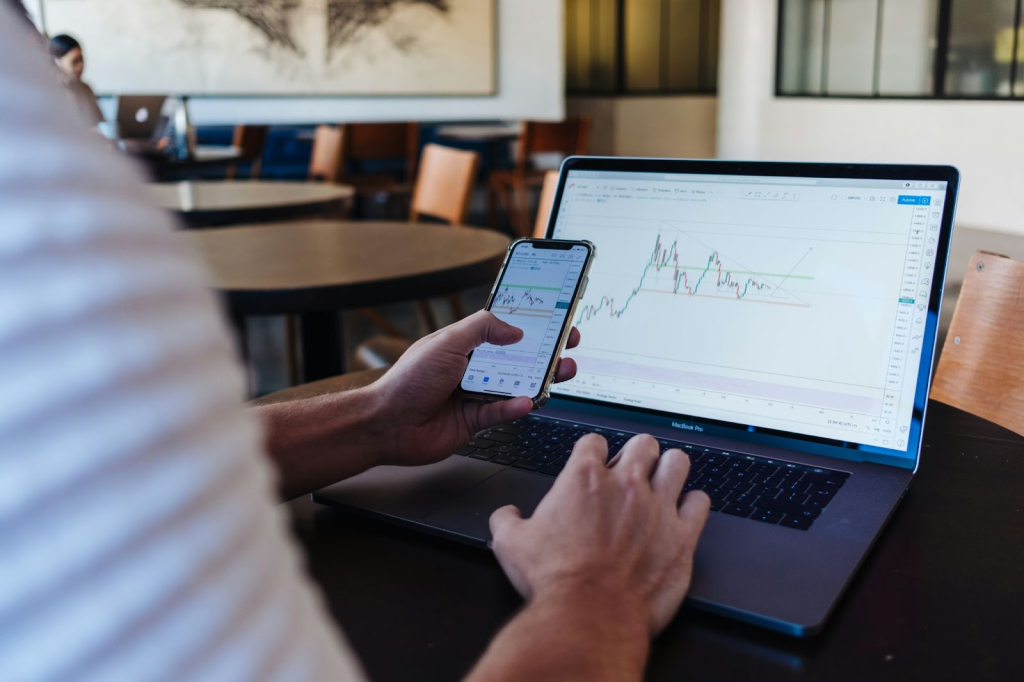
The rise of AI trading software has sparked one of the biggest debates in modern finance: Can artificial intelligence outperform human traders? While both approaches have strengths and weaknesses, the clash between AI trading and human intuition is shaping the future of investing.
In this article, we’ll explore how AI compares with human traders, the advantages of each, and whether machines or humans will dominate the markets in the years ahead.
Human Traders: The Traditional Approach
For centuries, financial markets have been driven by people—traders using analysis, experience, and instinct to make decisions. Human traders rely on skills such as:
- Emotional Intelligence – Reading market sentiment and reacting accordingly
- Critical Thinking – Interpreting complex data beyond numbers
- Creativity – Developing unique strategies to navigate uncertainty
- Adaptability – Adjusting quickly to unexpected market shifts
These qualities have allowed human traders to succeed even when faced with unpredictable events. Famous investors like Warren Buffett and George Soros are prime examples of how human judgment can generate massive success.
AI Trading: The New Challenger
AI trading software brings something entirely new to the table: speed, automation, and data-driven accuracy. Instead of relying on emotions or instincts, AI systems use algorithms and machine learning to analyze vast amounts of financial data in milliseconds.
AI trading systems excel at:
- Processing Big Data – Scanning millions of data points instantly
- Pattern Recognition – Identifying signals humans might overlook
- Emotion-Free Decisions – Avoiding fear, greed, and panic
- 24/7 Operation – Monitoring markets around the clock
- High-Speed Execution – Placing trades in fractions of a second
These strengths make AI trading especially powerful in fast-moving markets like forex and cryptocurrency.
Strengths of Human Traders
While AI has obvious advantages, humans still possess qualities that machines cannot fully replicate:
- Intuition in Uncertainty
Markets are influenced by politics, culture, and psychology. Humans can interpret subtle, unstructured events—such as government statements or global crises—better than algorithms. - Ethical and Strategic Judgment
Traders can consider long-term strategies, ethics, and business fundamentals that AI may overlook. - Creativity
Unlike AI, which learns from existing data, humans can think outside the box and innovate trading methods. - Adaptability to Novel Events
During black swan events (like the 2008 financial crisis or 2020 pandemic), human reasoning can be more flexible than rigid algorithms.
Strengths of AI Traders
On the other side, AI trading software provides undeniable benefits:
- No Emotional Bias
AI avoids impulsive mistakes caused by fear or greed, two common pitfalls for humans. - Speed and Scale
AI executes trades within milliseconds and monitors multiple markets at once, which is impossible for humans. - Continuous Learning
Machine learning allows AI to improve constantly by analyzing past results. - Lower Operational Costs
Once set up, AI systems can handle thousands of trades without requiring salaries, breaks, or rest.
Weaknesses of Human Traders
- Emotional Decision-Making – Humans are prone to overreacting during volatility.
- Slow Execution – Even the fastest human cannot compete with algorithmic speed.
- Limited Capacity – A trader can only analyze so much data at once.
- Fatigue – Human focus and energy decline over time.
Weaknesses of AI Traders
- Over-Reliance on Data – AI struggles when facing unexpected, unprecedented events.
- Lack of Creativity – Algorithms cannot innovate beyond the data they’ve been trained on.
- Black Box Problem – Many AI models are difficult to interpret, making decision-making opaque.
- System Risks – Glitches, hacking, or coding errors can lead to massive financial losses.
Who Wins: AI or Humans?
The truth is, neither AI nor human traders are perfect. Each has strengths the other lacks. Instead of competing, the most successful strategies may come from collaboration.
- AI + Human Hybrid Models
Many firms are adopting hybrid systems where AI handles speed and data analysis, while humans provide oversight, intuition, and ethical judgment.
This approach combines the best of both worlds: machine efficiency and human creativity.
The Future of Trading
As of 2025, AI trading is growing rapidly, and experts predict that over 70% of global trades will soon be powered by AI-driven systems. However, human traders will remain essential for strategy, innovation, and handling unique scenarios.
The future likely belongs to human-AI partnerships rather than one replacing the other. Traders who learn to work alongside AI will have the strongest advantage in the years ahead.
Final Thoughts
The debate of AI vs. human traders is not about one side winning outright. Instead, it’s about integration.
- Humans bring intuition, ethics, and creativity.
- AI contributes speed, precision, and scalability.
Together, they create a powerful combination that is reshaping global markets. For investors, the message is clear: embracing both AI and human intelligence is the smartest way to thrive in the future of trading.
